Designing an Epic Esports Event: The Game Tournament Flyer
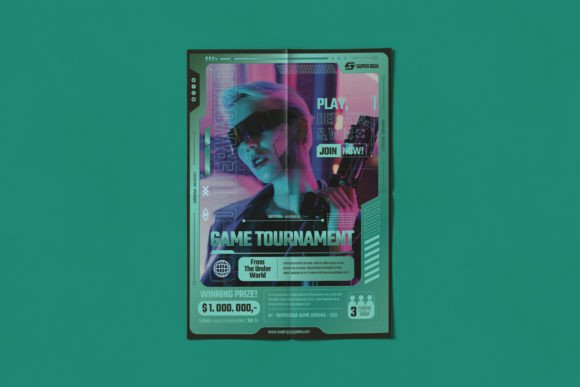
There’s a specific energy that fills the room when a gaming tournament is announced. It’s not just about the competition; it’s about the community, the hype, and the visual spectacle. If you are a small business owner, event organizer, or freelance designer tasked with promoting a local LAN party, a charity stream event, or a corporate team-building gaming night, you know that the invitation sets the tone. You need a visual asset that screams "action" before the first controller is even plugged in. This is where having a high-quality, professional design template becomes a game-changer, specifically when looking at assets like the Game Tournament Flyer. It bridges the gap between a casual social media post and a professional, high-stakes event invitation.
Practical Applications Beyond the Poster
When we think of a "flyer," our minds usually jump to a piece of paper taped to a coffee shop window or handed out on a street corner. However, in the modern marketing landscape, a well-structured template like the Game Tournament Flyer serves as a versatile design asset that transcends print. Because the files are provided in both Adobe Photoshop (.psd) and Adobe Illustrator (.ai) formats, you have the freedom to adapt the design to fit a multitude of creative needs.
Consider the branding requirements of a modern esports team or a gaming cafe. You aren't just selling a one-time event; you are building an identity. The visual language established in the flyer—its color palette, typography, and imagery—can be repurposed for social media graphics. Imagine extracting the header design for a Twitch overlay or resizing the background texture for an Instagram Story. The layered structure of the file allows you to isolate elements, making it easy to create cohesive marketing assets across different platforms without starting from scratch.
Furthermore, the utility of this design extends into packaging and merchandise. If your tournament includes prize packs or team jerseys, the design elements from the flyer can be adapted for label designs or heat transfers. The Smart Objects feature in the Photoshop file is particularly useful here. It allows you to mock up how your logo or event branding looks on a physical product—like a t-shirt or a mousepad—simply by dragging and dropping your artwork into the designated layer. This helps in visualizing the end product before committing to printing costs, ensuring your brand identity remains consistent from the digital invite to the physical swag.
Customization: Making the Template Your Own
One of the biggest hurdles with premium design templates is the "template look"—that feeling that you are using a generic asset that everyone else has. The Game Tournament Flyer mitigates this through deep customization capabilities. It is designed with the user in mind, specifically those who may not have a degree in graphic design but have a clear vision for their brand.
The "Very Easy to Edit" promise is backed by a well-organized layers structure. For a designer, this means no hunting through hundreds of unnamed folders to find the element you want to change. For a small business owner, it means you can quickly swap out text and images without breaking the layout. The text layout is pre-composed to handle the hierarchy of information naturally—event name, date, location, and prizes—so you don't have to worry about kerning or leading issues that plague DIY designs.
Color psychology is vital in gaming. Neon greens, electric blues, and aggressive reds often signal "tech" and "adrenaline." However, your specific brand might use different colors. The ability to customize colors easily ensures that the flyer matches your existing brand identity. Whether you are running a retro 8-bit tournament or a sleek, futuristic FPS competition, the color palette can be shifted in seconds. Additionally, the use of CMYK 300 DPI settings ensures that what you see on screen translates accurately to professional print, avoiding the disappointment of washed-out colors on the final poster.
Bridging the Gap Between Digital and Print
In a world dominated by screens, the tactile nature of print still holds significant power, especially for local events. A physical poster in a gaming lounge or a flyer distributed at a comic book store creates a tangible connection with the audience. However, the transition from digital file to physical print is where many DIY projects fail.
This is why the technical specifications of the Game Tournament Flyer matter. The A4 size (8.27 x 11.69 inch with bleed) is the international standard, making it versatile for both local printing shops and international distribution. The inclusion of "bleed" is a detail that separates amateur work from professional print materials. It ensures that when the flyer is cut down to size, you don't end up with an awkward white border on the edge of your design.
For those creating editorial layouts or blogs about the event, the vector nature of the Adobe Illustrator (.ai) file is a massive asset. Vectors are scalable. You can blow up the design for a massive backdrop banner at the event venue or shrink it down for a website favicon without losing image quality. This scalability is crucial for maintaining a professional presentation across all mediums, from a tiny mobile screen to a 6-foot wide poster.
The Importance of Typography and Licensing
Typography often makes or breaks a design, particularly in the gaming niche where fonts need to convey speed, technology, or fantasy. A common pitfall when downloading templates is discovering that the beautiful font used in the preview requires a $50 commercial license to use legally. This is a headache for entrepreneurs and content creators trying to keep costs down.
The Game Tournament Flyer addresses this by utilizing only free fonts. This is a massive advantage for small business owners. It means you can use the design for commercial purposes—selling tickets, promoting a paid event, or advertising a business—without worrying about hidden licensing fees or legal issues down the road. It respects the reality of running a business where budget management is key.
When you open the file, take a moment to review the font styles included. Display fonts are typically used for headers to grab attention, while sans-serif fonts are used for body text to ensure readability. A good template balances these two. If you decide to swap the fonts to match your specific brand voice, ensure you maintain this hierarchy. A common mistake is using a decorative, hard-to-read font for the event details (like the address or time), which can hurt audience engagement. Keep the details clean and legible; save the stylistic flair for the title.
Streamlining Your Workflow
For the creative entrepreneur or marketer, time is a resource just as valuable as money. Building a high-impact flyer from scratch in Photoshop or Illustrator could take hours, if not days, of adjusting layouts and sourcing assets. By starting with a professional template, you streamline your workflow significantly.
The inclusion of a Help File is a small but critical feature that adds value. It removes the guesswork. If you are new to Smart Objects or unsure how to handle the bleed settings for your printer, the guide provides the necessary context. This allows you to focus on the creative strategy—deciding on the copy, the specific imagery, and the call to action—rather than getting bogged down in technical software troubleshooting.
Ultimately, the goal is to create visual consistency that builds trust. When your flyer looks polished, your audience assumes the event will be organized and professional. Whether you are designing for a local community center, a corporate team-building event, or a massive online stream, having a reliable, customizable, and technically sound template is the first step toward a successful turnout. It allows you to present your best visual self to the world, ensuring that the hype for your tournament begins the moment the audience lays eyes on the design.